Commercial Work
Desert Roji
Commercial Work
Desert Roji
Threshold of Silence
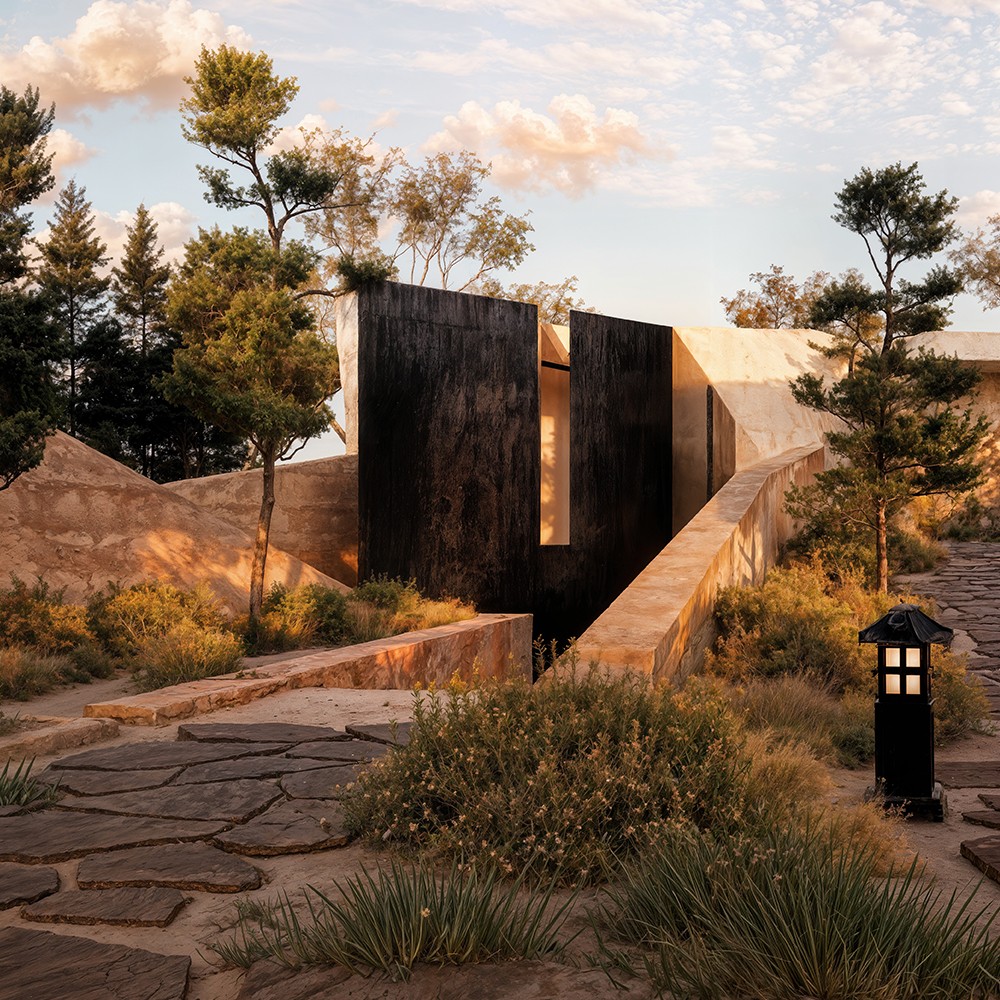
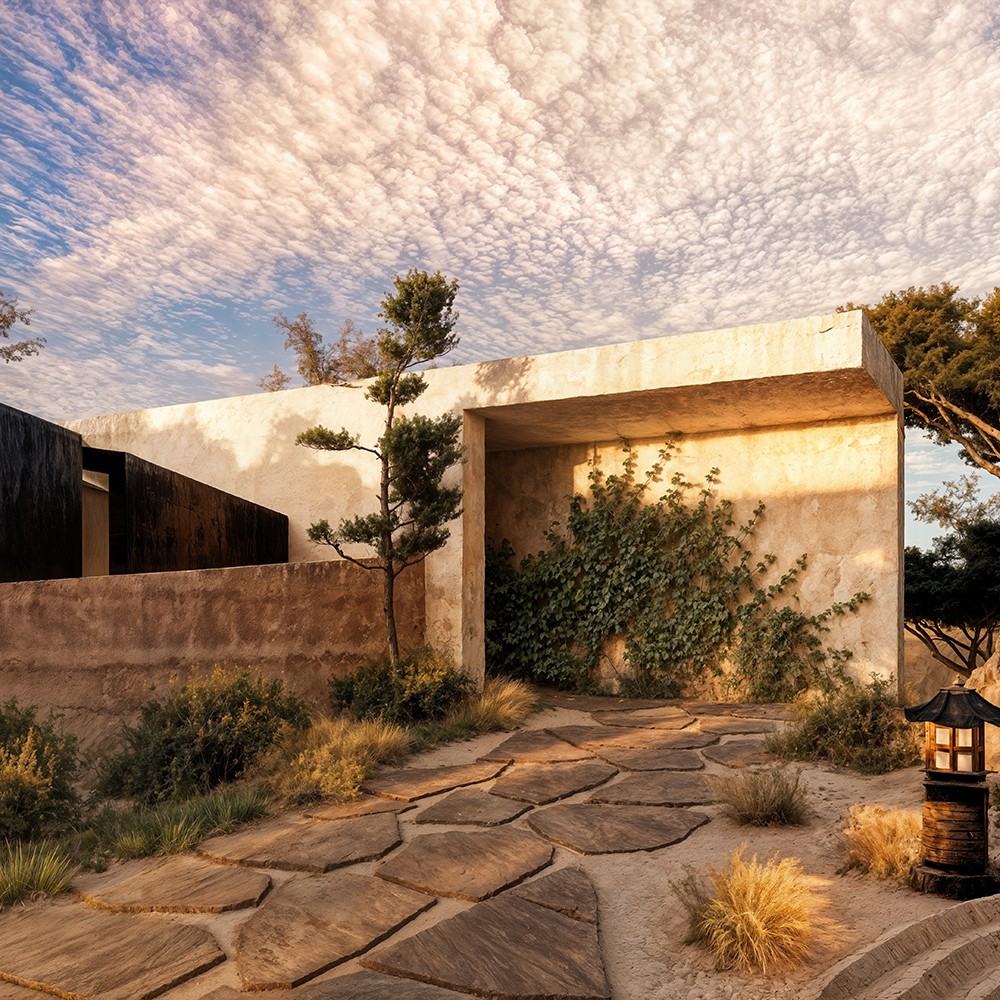
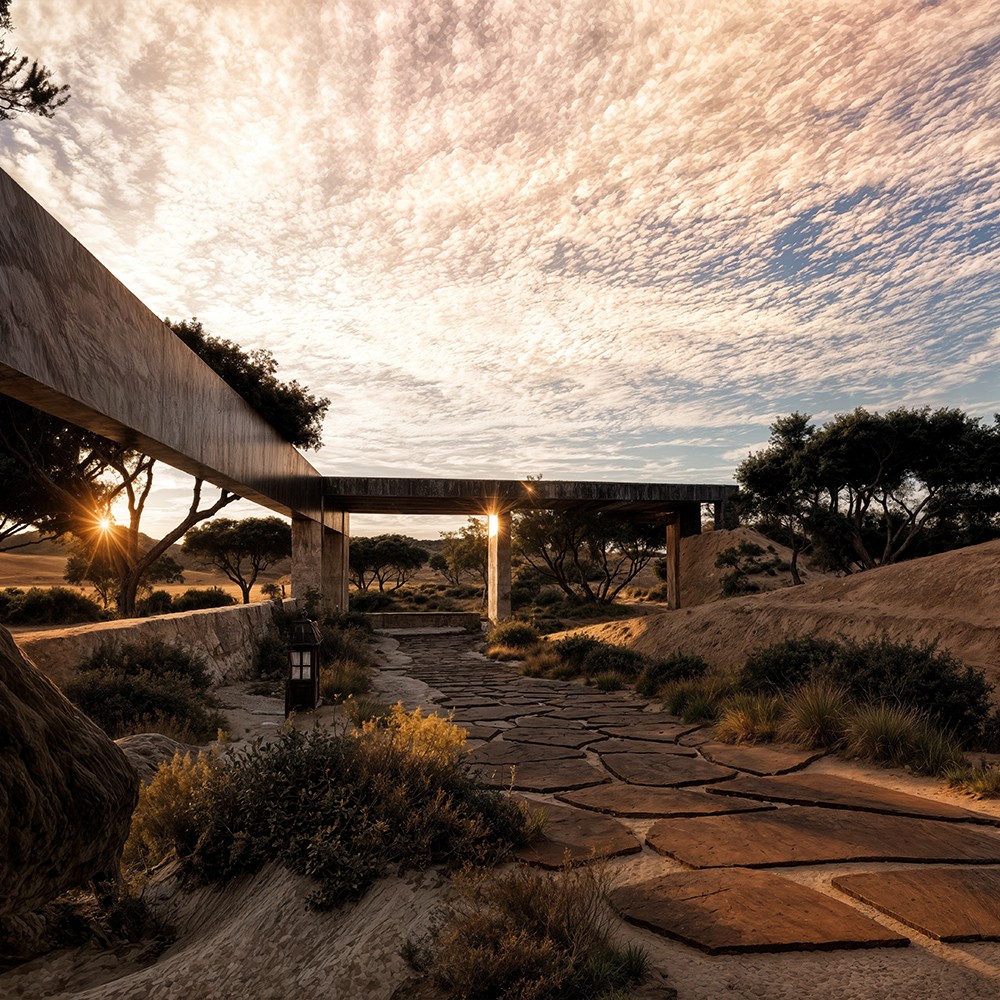
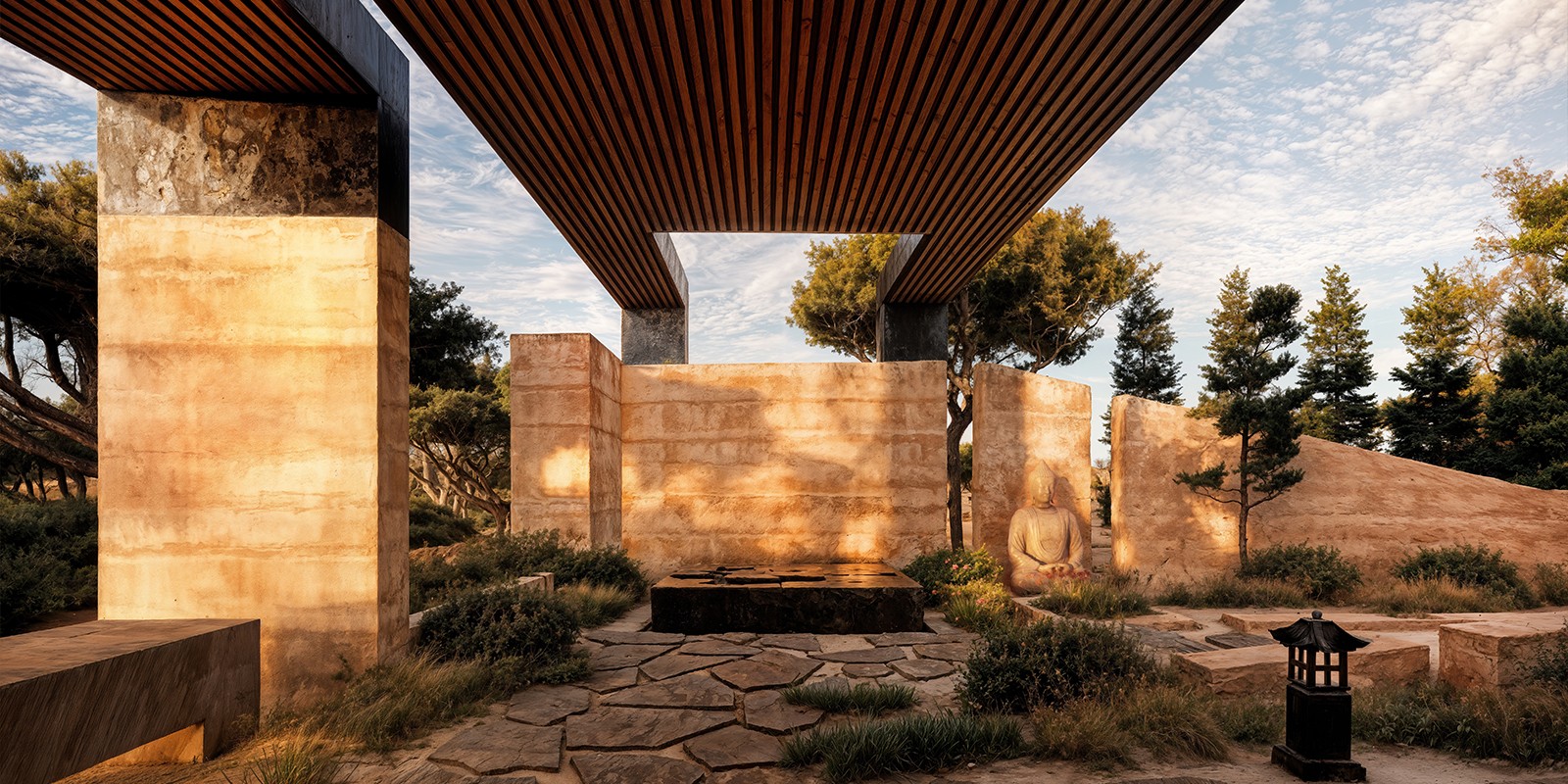
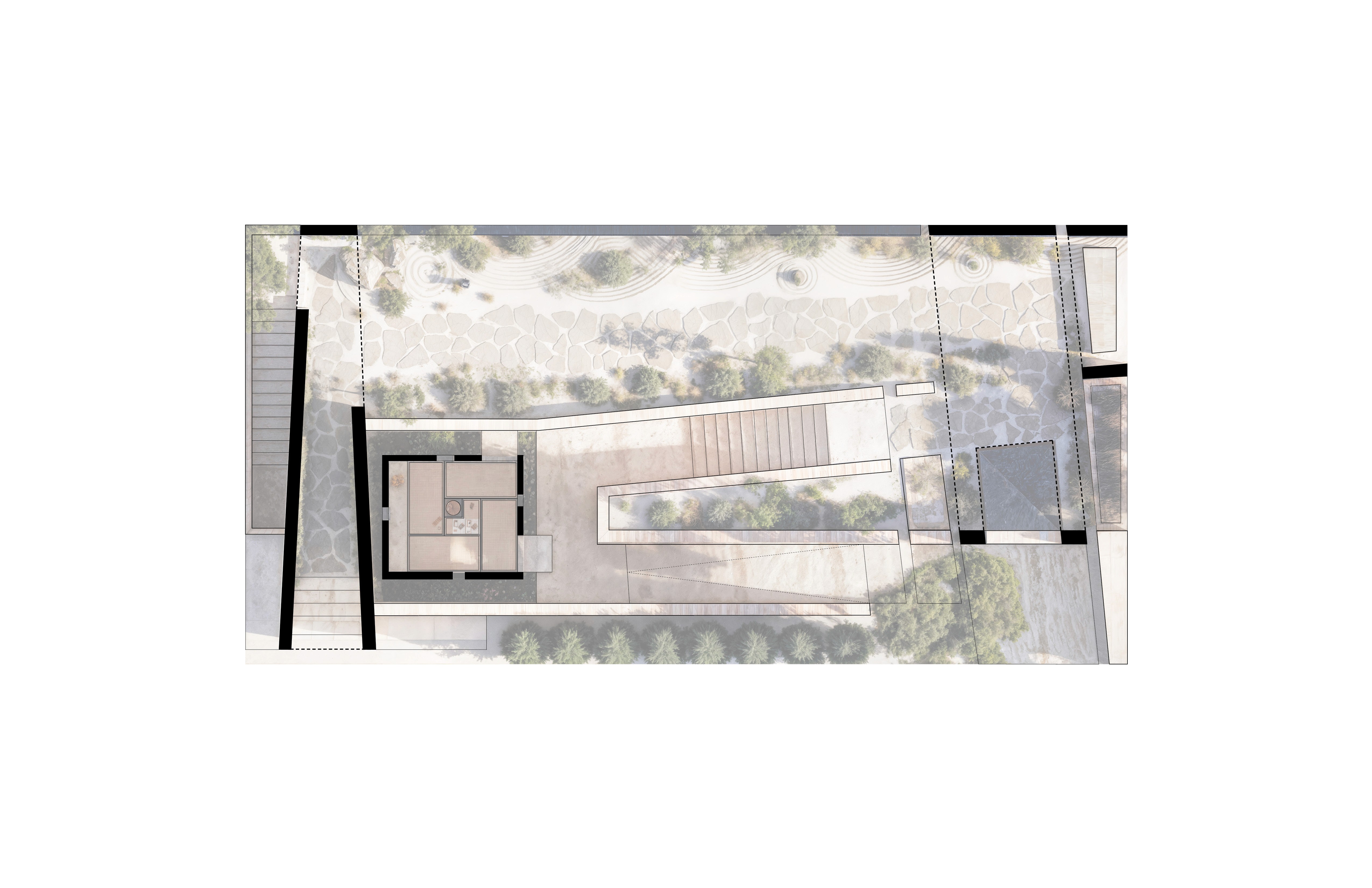
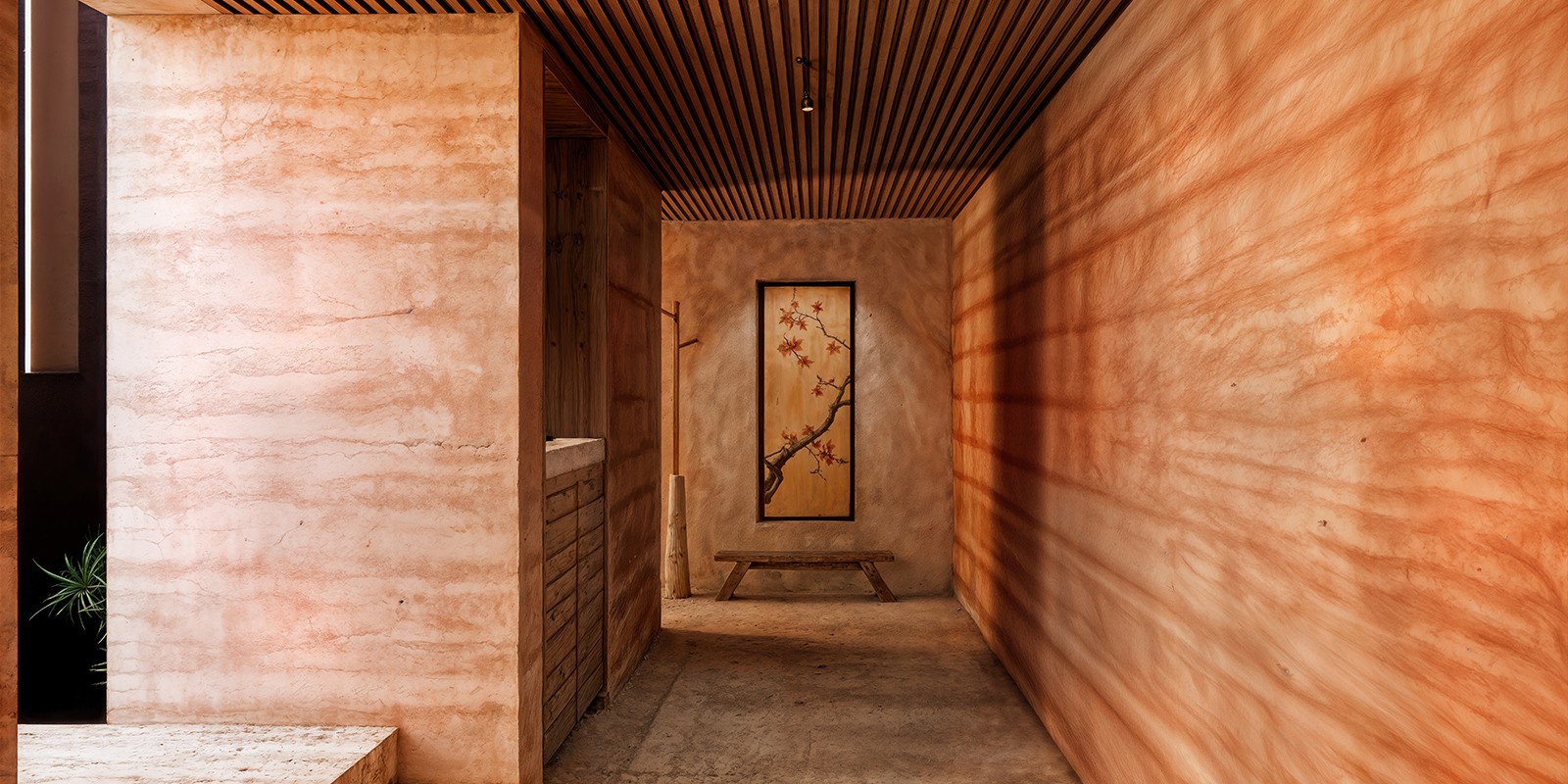
Desert Roji begins not as an object, but as an approach. A sequence of compressed earthen walls, stone paths, and filtered light draws the body inward through a gradual shedding of the external world. Inspired by the ceremonial entry garden of the Japanese tea house, the project reinterprets the roji as a desert instrument of transition. Rammed earth planes rise with quiet authority, catching the low sun in striated bands of warmth and shadow. Overhead, dark timber canopies and stone lintels hover in deliberate restraint, framing sky as aperture rather than view.
Measured Passage
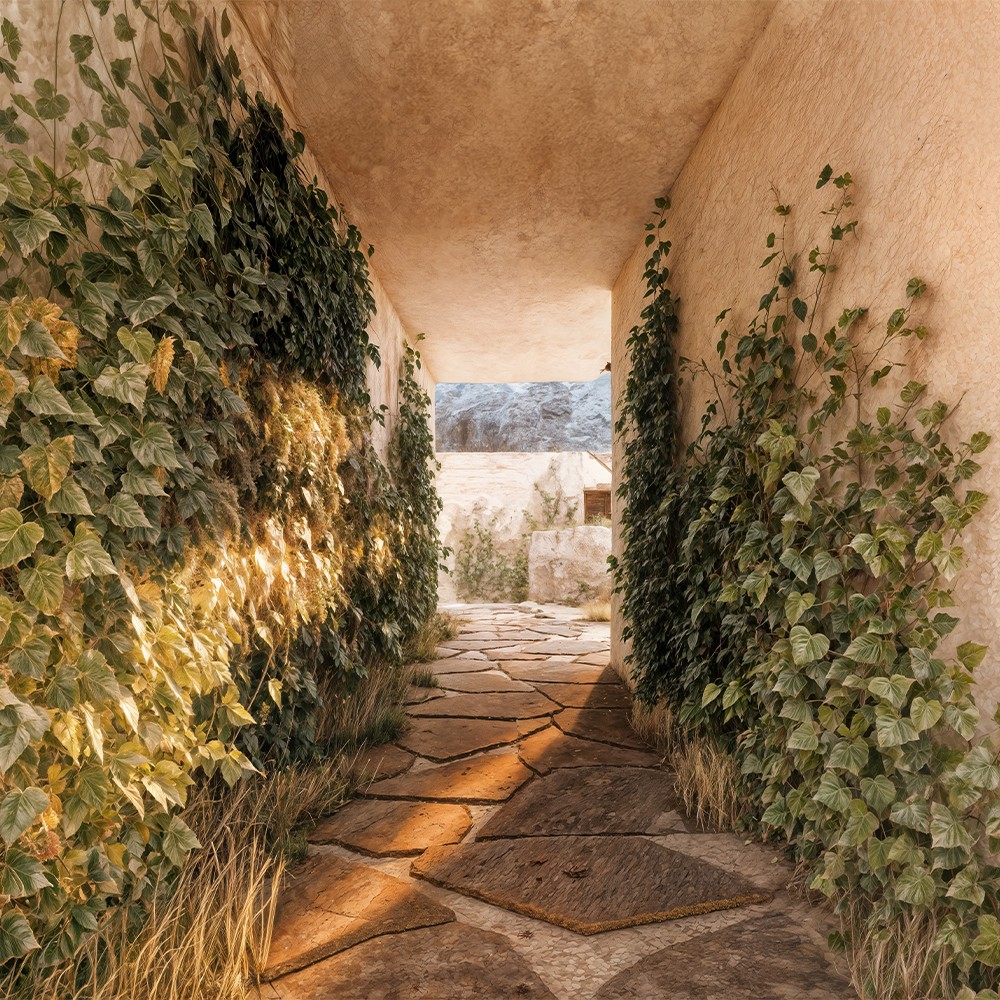
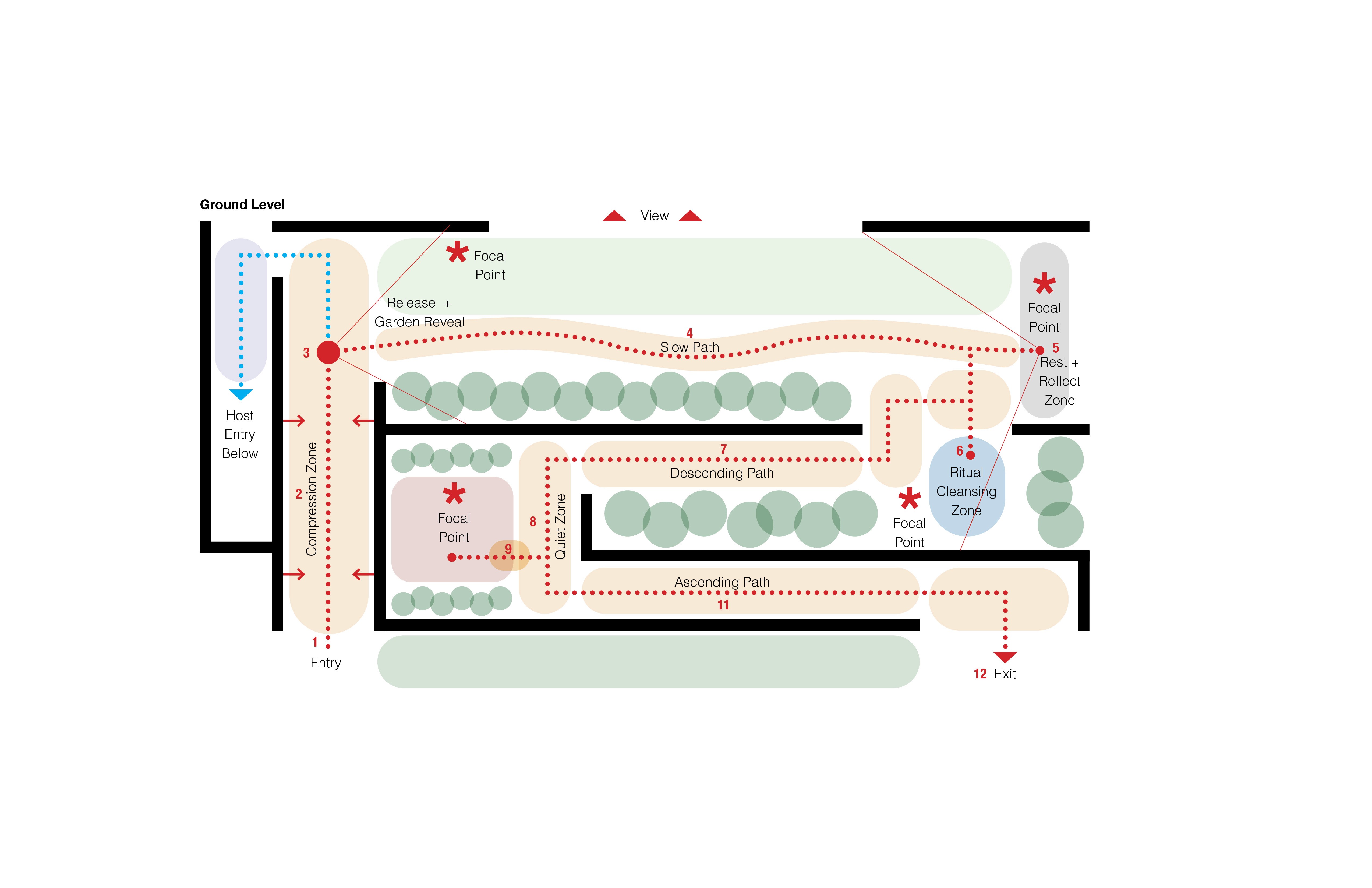
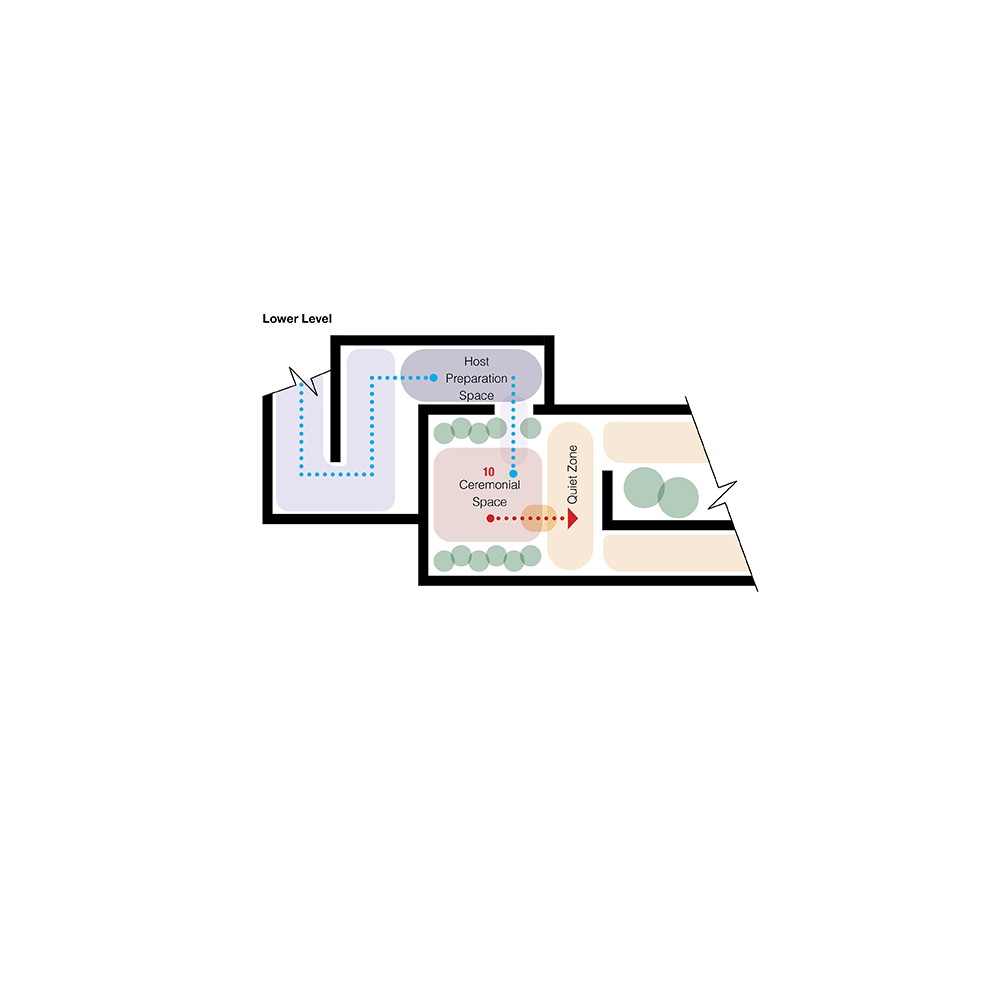
Movement through the compound unfolds as a calibrated rhythm of enclosure and release. Shallow water basins, mossy stone, lantern light, and planted voids guide procession without instruction. Each step becomes intentional. Rather than offering direct sightlines, the architecture withholds and edits, revealing only fragments of space at a time. Walls bend and narrow, then open suddenly into contemplative courts. The body slows. Sound dampens. The desert beyond is never erased, only softened through ritual sequencing and spatial compression.
Inhabited Stillness
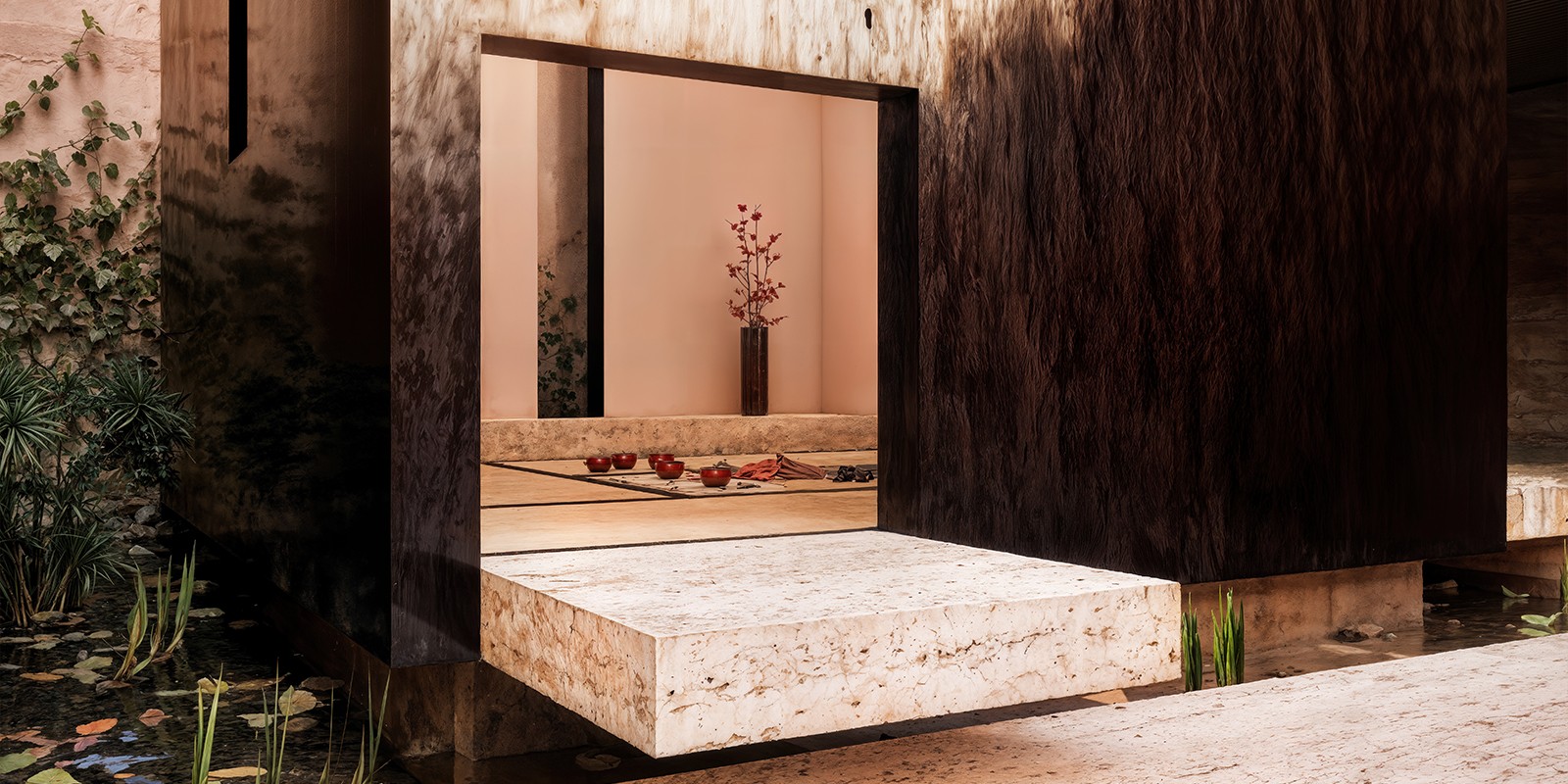
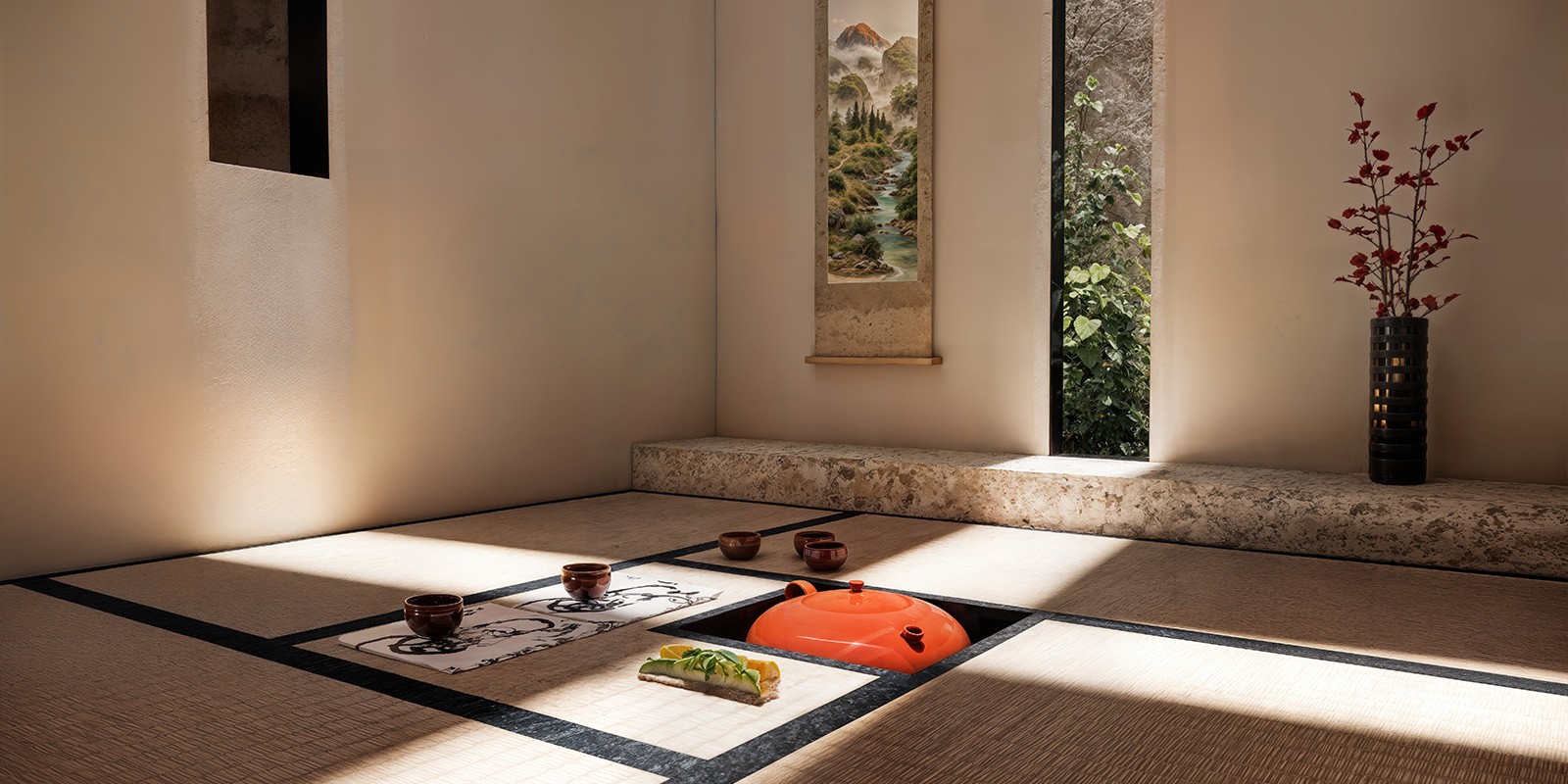
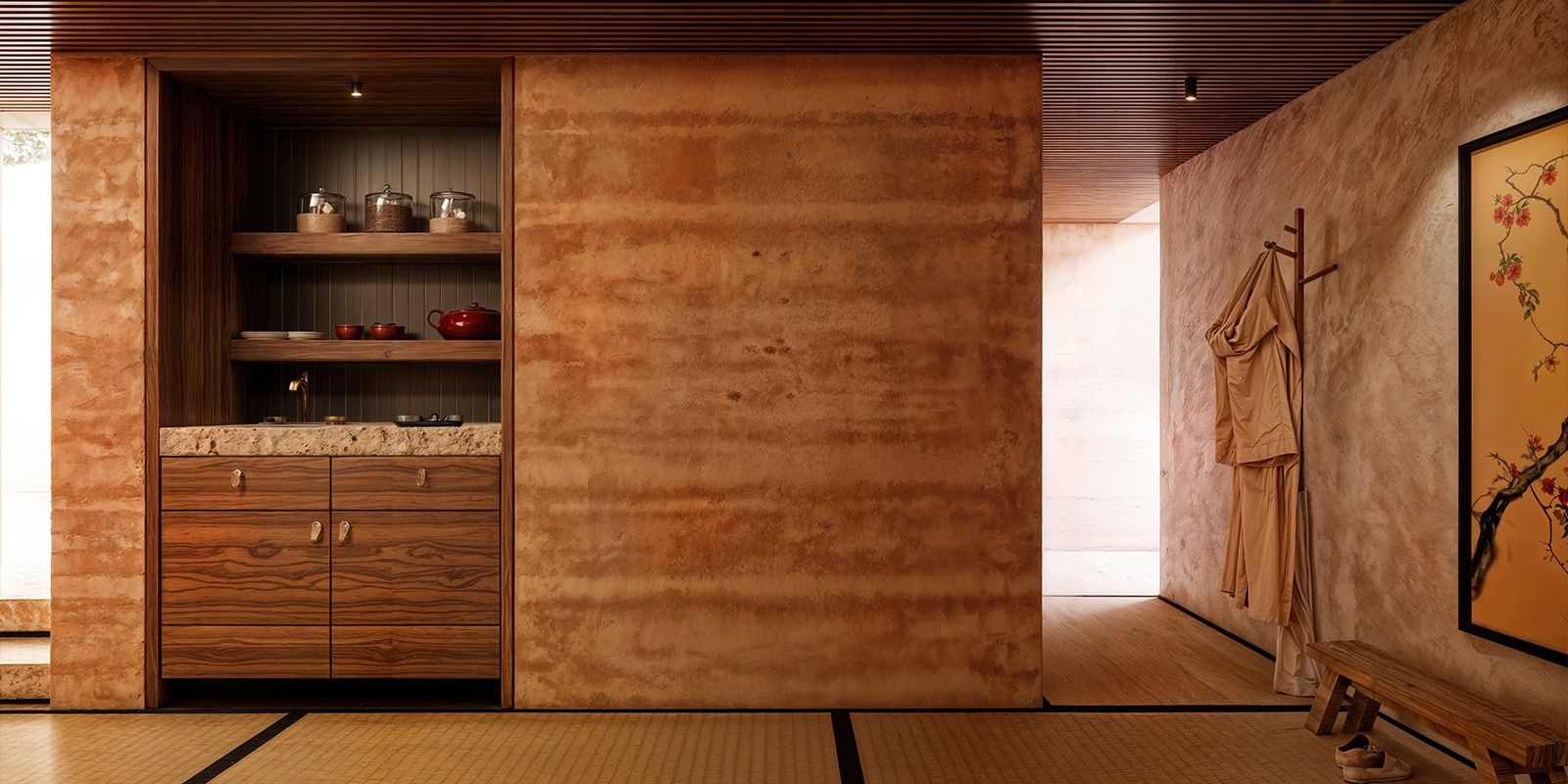
At its core, Desert Roji is not about destination but about controlled duration. Interior spaces dissolve into garden rooms through shadowed thresholds and stone platforms lifted just above water. Materials remain elemental: earth, wood, stone, shadow, and reflected sky. No surface performs excessively. Nothing seeks spectacle. The architecture exists in quiet alignment with breath, movement, and the passage of daylight. It is a space for pause, for ceremony without performance, and for a cultivated stillness carved from open terrain.
“Desert Roji transforms the desert itself into a ritual device, where architecture does not announce arrival, but teaches the body how to slow.”
Kevin M. Welch, AIA
Architect + Founder | Arcturus
Threshold of Silence
Desert Roji begins not as an object, but as an approach. A sequence of compressed earthen walls, stone paths, and filtered light draws the body inward through a gradual shedding of the external world. Inspired by the ceremonial entry garden of the Japanese tea house, the project reinterprets the roji as a desert instrument of transition. Rammed earth planes rise with quiet authority, catching the low sun in striated bands of warmth and shadow. Overhead, dark timber canopies and stone lintels hover in deliberate restraint, framing sky as aperture rather than view.
Commercial Work
Desert Roji
Threshold of Silence
Desert Roji begins not as an object, but as an approach. A sequence of compressed earthen walls, stone paths, and filtered light draws the body inward through a gradual shedding of the external world. Inspired by the ceremonial entry garden of the Japanese tea house, the project reinterprets the roji as a desert instrument of transition. Rammed earth planes rise with quiet authority, catching the low sun in striated bands of warmth and shadow. Overhead, dark timber canopies and stone lintels hover in deliberate restraint, framing sky as aperture rather than view.
Measured Passage
Movement through the compound unfolds as a calibrated rhythm of enclosure and release. Shallow water basins, mossy stone, lantern light, and planted voids guide procession without instruction. Each step becomes intentional. Rather than offering direct sightlines, the architecture withholds and edits, revealing only fragments of space at a time. Walls bend and narrow, then open suddenly into contemplative courts. The body slows. Sound dampens. The desert beyond is never erased, only softened through ritual sequencing and spatial compression.
Inhabited Stillness
At its core, Desert Roji is not about destination but about controlled duration. Interior spaces dissolve into garden rooms through shadowed thresholds and stone platforms lifted just above water. Materials remain elemental: earth, wood, stone, shadow, and reflected sky. No surface performs excessively. Nothing seeks spectacle. The architecture exists in quiet alignment with breath, movement, and the passage of daylight. It is a space for pause, for ceremony without performance, and for a cultivated stillness carved from open terrain.
“Desert Roji transforms the desert itself into a ritual device, where architecture does not announce arrival, but teaches the body how to slow.”
Kevin M. Welch, AIA
Architect + Founder | Arcturus
Measured Passage
Movement through the compound unfolds as a calibrated rhythm of enclosure and release. Shallow water basins, mossy stone, lantern light, and planted voids guide procession without instruction. Each step becomes intentional. Rather than offering direct sightlines, the architecture withholds and edits, revealing only fragments of space at a time. Walls bend and narrow, then open suddenly into contemplative courts. The body slows. Sound dampens. The desert beyond is never erased, only softened through ritual sequencing and spatial compression.
Inhabited Stillness
At its core, Desert Roji is not about destination but about controlled duration. Interior spaces dissolve into garden rooms through shadowed thresholds and stone platforms lifted just above water. Materials remain elemental: earth, wood, stone, shadow, and reflected sky. No surface performs excessively. Nothing seeks spectacle. The architecture exists in quiet alignment with breath, movement, and the passage of daylight. It is a space for pause, for ceremony without performance, and for a cultivated stillness carved from open terrain.
“Desert Roji transforms the desert itself into a ritual device, where architecture does not announce arrival, but teaches the body how to slow.”
Kevin M. Welch, AIA
Architect + Founder | Arcturus